Books by Jonathan Fussell
Professional resources for photographers seeking to streamline their business and workflow management.
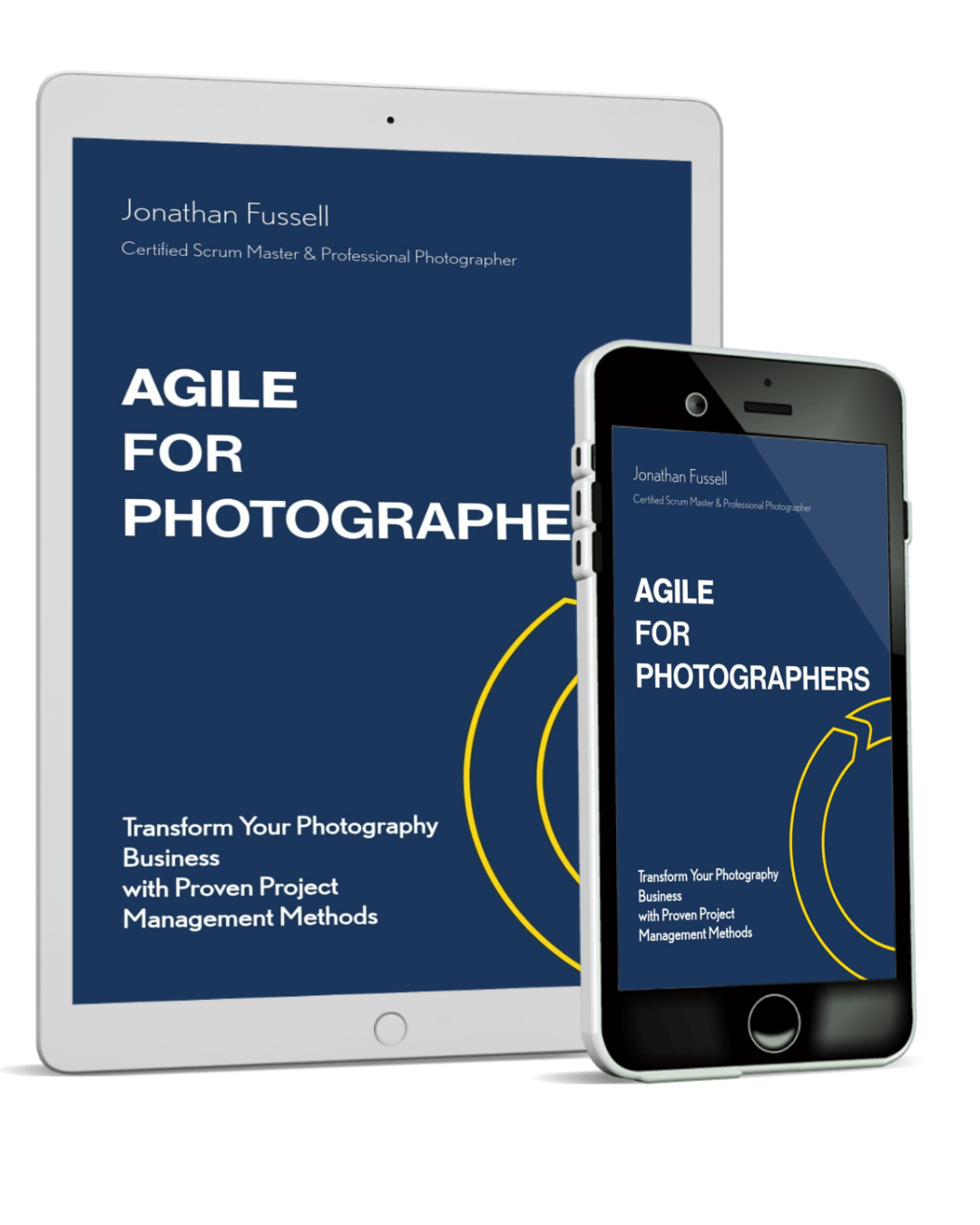
Agile for Photographers: Transform Your Photography Business with Proven Project Management Methods
The Challenge Every Photographer Faces
You're in the middle of a wedding shoot, and the bride suddenly wants more candid shots instead of the formal poses you planned. Or you're editing a corporate headshot session, and the client requests a complete style change. You're juggling multiple photo shoots, client meetings, and editing deadlines while trying to maintain your creative vision. Sound familiar?
For photographers, chaos is part of the job. You naturally adapt to changing light, unpredictable subjects, and client requests on the fly. But what if you could harness these instincts more deliberately? What if you could formalise the adaptive habits you already have and apply them strategically to every aspect of your photography business?
Most photographers rely on instinct and experience. You're naturally adaptable; it's what makes you great. But without a formalised system, even a thriving photography practice can feel overwhelming. Email piles up. Project deadlines slip. Editing queues grow endlessly. Client communication breaks down. Whether you're a solo photographer managing five clients per month or a studio coordinating twenty events annually, the struggle is real.
What This Book Offers
"Agile for Photographers" bridges the gap between your creative instincts and structured project management. Drawing on my unique background as both a Certified Scrum Master and professional photographer with over two decades of experience, this book translates proven business management methodologies into practical, immediately applicable strategies for photography businesses.
This isn't a heavy technical manual filled with corporate jargon or software development terminology. It's an accessible introduction designed specifically for photographers and creatives who think visually and need straightforward frameworks they can implement tomorrow. The goal is simple: help you work smarter, not harder, by bringing intentional structure to your creative practice.
The photography examples throughout are real: wedding photographers breaking down overwhelming workloads into manageable sprints, commercial photographers visualising their workflow to eliminate bottlenecks, portrait photographers streamlining their editing process, and solo operators maintaining creative freedom while improving organisation.
Who This Book Is For
Wedding and Event Photographers – You juggle multiple events, client timelines, deliverables, and communication across months. Learn how to structure each wedding into focused sprints, manage multiple events simultaneously without losing quality, and eliminate those anxious "Where are our photos?" emails by keeping clients informed throughout your workflow.
Portrait and Headshot Photographers – You manage client bookings, shooting sessions, post-processing, and marketing all at once. Discover how simple workflow visualisation and project organisation can reduce stress, improve consistency across clients, and deliver results without burning out.
Commercial and Editorial Photographers – Managing client projects with constantly shifting priorities and growing deadlines is complex. Learn how to balance competing client needs while keeping all projects moving forward, and how to use data-driven insights to refine your processes.
Solo Photographers and Small Studio Owners – Whether you work entirely alone or have 1-3 team members, this book shows you how to implement structure without complexity. You'll discover that Agile is like a zoom lens—it adjusts to fit any size business, from solo operators to small teams.
Photographers Scaling Their Business – Your photography business is growing. Client inquiries are up. But your organisational systems haven't evolved. Learn how to scale your workflow, build team coordination without bureaucracy, and maintain quality as volume increases.
What You'll Learn
How to Break Down Overwhelming Projects Into Manageable Pieces
Think of your photography projects as stories waiting to be told. Rather than tackling a wedding shoot as one massive undertaking, break it down into smaller, manageable chapters: the pre-wedding consultation, venue scouting, shot planning, the wedding day, editing, and album design. This approach makes even the most complex projects feel achievable.
Scrum for Photographers – Sprints That Actually Work
Your workweek becomes a series of focused "sprints," typically lasting 1 to 2 weeks. During one sprint, you might schedule two portrait sessions while editing last week's wedding photos. The next sprint focuses on delivering wedding photos while conducting consultations for upcoming clients. This structured approach prevents the overwhelming feeling of having too many open projects at once.
Kanban for Visualising Your Workflow
Visualising your workflow becomes your secret weapon. Whether you prefer physical sticky notes or digital tools like Trello, create a simple board with columns for To-Do, In Progress, and Done. As you move tasks across the board, you gain instant clarity on your workload and progress. Your family portrait session moves from "To-Do" to "In Progress" when you start shooting and finally to "Done" when you deliver images.
Starting Simple – Even Soloists Can Win
Common concern: "I'm just a solo shooter, isn't Agile only for big teams?" The truth is more nuanced. Agile principles scale beautifully.
The Solo Photographer's Feedback Loop
Start each day with a personal stand-up meeting. Take five minutes to review yesterday's accomplishments, plan today's tasks, and identify potential obstacles. This daily check-in keeps you focused and prevents tasks from slipping through the cracks.
Client collaboration becomes more structured and effective. Instead of waiting until you've edited an entire wedding album, share a few key shots early to ensure your editing style matches the couple's vision. This iterative approach saves time and builds client confidence.
After each project, reflect on what went smoothly and what could be improved. You may discover that scheduling consultation calls in the morning leaves your afternoons free for uninterrupted editing time, or that certain types of shots consistently receive the most positive client feedback. Use these reflections to continuously improve.
Scaling Your Business – From Solo to Team
When working with a team, projects naturally break down into complementary roles. The lead photographer might focus on keynote speakers during a corporate event while the second shooter captures candid audience moments. Meanwhile, the assistant manages lighting and equipment, and an editor begins processing images for same-day social media posts.
Daily huddles become your team's compass. These quick 15-minute check-ins ensure everyone knows their focus for the day and can address challenges quickly. A team Kanban board, whether physical or digital, becomes your studio's command centre. Everyone can see which projects are in progress, who's responsible for what, and what needs attention next.
Building Your Agile Photography Toolkit
The book explores practical tools that photographers use to stay organised and automate repetitive work:
Project Management Tools: Trello functions like a digital corkboard for your photography projects. Asana provides timeline-based planning for larger projects. ClickUp combines task management, time tracking, and document storage in one platform. Studio Ninja handles the business side of photography—when a client books, it orchestrates automated responses, welcome emails, contracts, questionnaires, calendar updates, and task lists.
Automation Tools: Zapier connects your photography apps into a seamless workflow. Imagine a new client filling out your contact form, and automatically they're added to your CRM, a project is created in your management tool, and they receive a welcome email with your pricing, all without you lifting a finger.
Communication Tools: Slack becomes your team's digital headquarters during complex shoots. Google Workspace provides cloud-based calendars, file storage, and collaborative documents accessible whether you're in the studio or on location.
Continuous Improvement and Reflection
After completing a project, gather your team (or reflect personally if solo) to celebrate successes and discuss improvements. You may discover that having the editor attend pre-shoot meetings leads to more efficient post-production, or that certain client types benefit from more frequent progress updates. Regular sprint retrospectives provide opportunities to refine your processes further.
The Future of Photography
The book explores emerging trends: hybrid Agile approaches blending Scrum and Kanban, remote collaboration through video check-ins and cloud-based tools, AI-assisted culling to speed initial edits, new delivery models (weekly batches for social media instead of everything at once), and data-driven decisions using time-tracking to understand your most time-consuming processes for better pricing and resource allocation.
Why I Wrote This Book
With over two decades of photography experience, I've seen how the industry evolves. From my early days in retail and film development to my current work in editorial, portraiture, and personal branding, one thing remained constant: the need to stay agile and responsive to client needs.
My unexpected detour into software development revealed the true power of formalising these practices. As a Certified Scrum Master, I witnessed firsthand how Agile methodologies could transform workflows and improve client satisfaction. Yet I also saw many teams struggling with implementation.
This experience revealed that photographers are uniquely positioned to embrace Agile principles. Unlike the tech world, where Agile often feels forced, photographers can integrate these methods organically, building on their existing intuitive approaches to client service and creative problem-solving.
I wrote this book because I've seen talented photographers struggle unnecessarily with disorganised workflows, missed deadlines, and client miscommunication, not because they lack creative skill or work ethic, but because they're missing practical systems. My goal was to create a resource that photographers could read in a weekend and implement immediately.
How to Use This Book
Consider this book your guide to photographic agility. Rather than presenting a rigid system, it offers a flexible approach you can adapt to your individual needs. This is the à la carte menu—not everything, just the proven practices that matter.
Start by setting up a simple project-tracking system, then gradually incorporate more sophisticated methods as your comfort level grows. Success doesn't mean implementing every technique outlined here. Instead, success is finding and applying the elements that match your style and business needs. Even a single idea, when properly executed, can significantly impact your workflow and client satisfaction.
The book includes:
Core concepts explained in straightforward language (no software jargon)
Photography-specific examples and real scenarios showing how principles apply to your business
Implementation steps—actionable guidance for putting concepts into practice
Reflection questions to help you think about how these approaches fit your situation
Recommended tools (both digital and analogue)
Troubleshooting guidance for common challenges
Real case studies from wedding, commercial, portrait, and solo photographers
The FAQ section addresses the questions every photographer asks
Key Chapters
Chapter 1: Introducing Agile to Your Photography Business – What Agile is, why it matters for photographers, and the four core values that align with how you already work.
Chapter 2: Scrum for Photographers – Breaking projects into focused sprints, understanding roles, and managing your workflow like a well-coordinated shoot.
Chapter 3: Kanban for Photographers – Visualising your workflow, limiting work-in-progress, and maintaining clarity amid complexity.
Chapter 4: Client Communication and Collaboration – Keeping clients informed, gathering feedback, and turning clients into partners in your creative process.
Chapter 5: From Solo to Team – Scaling your workflow and communication as you grow from solo operator to small team.
Chapter 6: Agile Photography Toolbox – A practical guide to modern tools: project management platforms, automation software, and communication systems.
Chapter 7: Agile Success Stories – Real photographers (Jane the wedding photographer, James the commercial photographer, Mary the solo portrait photographer) showing how they implemented these principles.
Chapter 8: FAQs and Troubleshooting – Common concerns about structure limiting creativity, time management, maintaining consistency as you scale, and more.
Chapter 9: The Future of Agile Photography – Emerging trends, AI integration, new delivery models, and staying ahead of industry changes.